The Short Version
A Short Philosophy of Birds by Philippe J. Dubois and Elise Rousseau, is a charming read and has earned it’s place on my bookshelf. The book looks at bird behaviour and examines whether this could or should be applied to human behaviour. It covers questions such as what is happiness, intelligence or art. Are they purely human or can birds experience the same? The book constantly dances across these lines, lines which are narrower than I ever gave them credit for. The text is not dense and riddled with scientific terminology so it can be a short read, but it really shouldn’t be, the ideas need time to percolate.
I enjoyed this book, after reading it my policy is to be more bird. An easy policy, there are so many different bird behaviours so I could use it to justify nearly all of my actions. Want to travel? I am a bird that needs migrate to warmer climates for winter. Jealous of someone else’s fish? Stealing is a legitimate hunting strategy. At the end of the day, if I do end up acting more aggressive than normal, then I am clearly channelling a robin. This book is going on my bookshelf and not just as a way to justify my every action.
The Long Version
A Short Philosophy of Birds is well written. I am always wary of books with multiple authors but the balance seems to have worked. The combination of an ornithologist with a philosopher means the books does not roam too heavily into either territory. This book is designed to be read in short bursts, to dip in and out of, at your leisure. The chapters are short but they cover ideas that deserved to be pondered. I read this all in one go, and I think my experience was worst off for it, however I lacked the willpower to put it down and go and do anything else with my Saturday.
The book escapes the normal criticisms of anthropomorphising animals, not because this book doesn’t do it, more because that is the point of the book. We are invited to imagine whether a hen having a dust bath in the sunshine is in fact experiencing joy, whether bower birds decorating their nests are doing it as a form of art or whether a migrating bird experiences the same broadening of horizons as a person does when they travel.
There was clearly a decision made to keep the science lighter so the implications on human behaviour could have space to breathe. There are lots of different birds behaviours mentioned and you are always told the name of the bird but not the scientific name. It is always a difficult line to tread in a book that covers an entire class full of species. Just writing out the scientific names of all the birds would take around two thirds of the book and no-one wants to read that. For similar reasons there are no in text references or a reference list at the back of the book. The book is not about what a scientist found out in the lab but whether this behaviour can relate to human behaviour.
A couple of times there are outbursts of feminism, which I enjoyed but found slightly jarring. I agreed with them all but they didn’t seem to fit in with the tone of the rest of the book. At the same time it often delved into the realm of dating advice, I don’t think this was intended but the narrative kept going back there. I can’t complain, with so much dating advice out there how can you be annoyed when this one joins the list? “To avoid misunderstandings, perhaps the key is to find a partner who is the same kind of bird as you.” Maybe bird species should be a category added to dating apps.
This book has left me with with the overall desire to be more bird. I might have missed making this my new years resolution by three months, but I think it will be a easy one to keep. After all, different birds have vastly different behaviours. The chapter on raising young illustrates this perfectly, there are single parent set-ups, dual parenting or even communal raising. Although pecking any offspring until they leave me alone and get on with their lives might be frowned upon by civilised society. One thing will stay with me, when people use animals to justify human behaviour, they are cherry picking exactly want they want to support their argument.
Judging a book by its cover
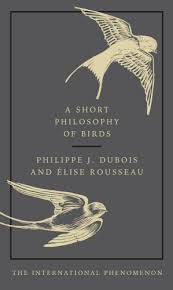
Now for the part where I go against perceived wisdom and judge the book on its cover, or if I want to be fancy, I judge the book for the reading experience it provides. Of course, I want to read books with content that will be enjoyable and enlightening but like most people that walk into a bookshop, or charity shop, the book has to stand out. This one falls into that category, I did not go out looking for this book, the book found me.
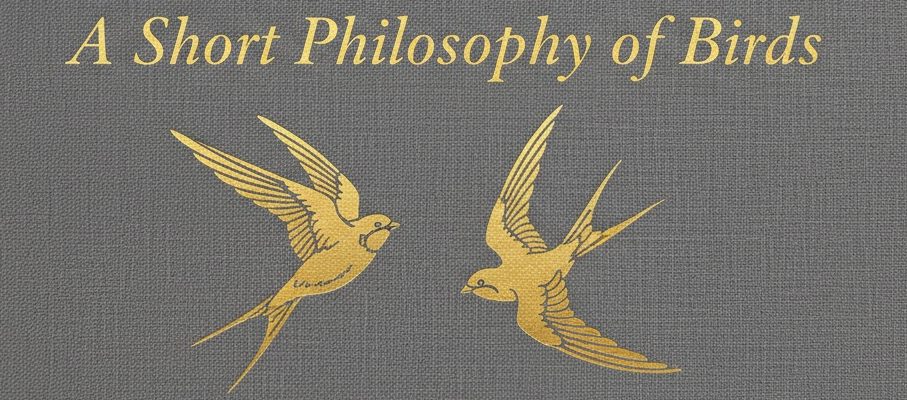
From the title and cover alone I knew I wanted to read this book. It is a hardback fabric covered book, the lettering is in gold with two golden etched birds in flight, dancing around the cover. As you open the book you are faced with a page of beautifully drawn birds, and each short chapter is based on a idea with a bird attached. For instance the chapter Power Games: The Crow and the Vulture has a beautiful illustration of two vultures to begin the chapter.
The overall effect is reminiscent of the books found in the libraries of stately homes. Regardless of the fact that it was only published in 2019, I think it could easily be suck into a National Trust collection and it would take years for them to realise. I won’t be doing this because, fundamentally, I want to be a person that has read this book, that owns this book. It didn’t really matter whether or not I liked the book, this book was getting space on my bookshelf purely for vanity’s sake.
Leave a Reply